Setting up a sensory bin at home does not require special tools or complicated materials. With a thoughtful approach, simple setups can offer rich learning opportunities and meaningful play.
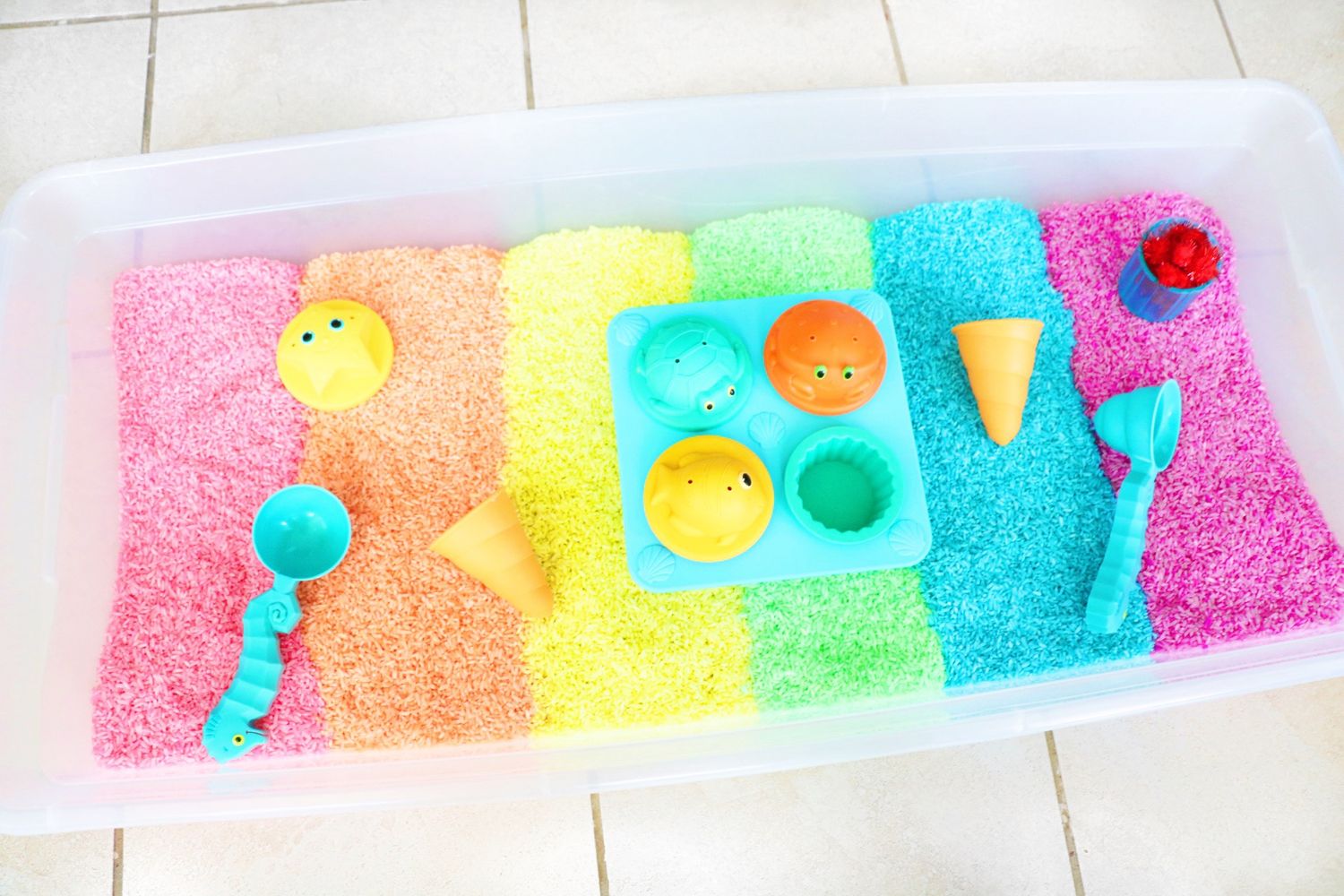
A sensory bin begins with a container and a base material. Dyed rainbow rice provides a visually engaging and tactile experience that naturally invites children to scoop, pour, and explore how materials move and change.
Adding tools such as sand toys and ice cream scoopers extends learning in purposeful ways. These tools support fine motor development and hand-eye coordination while encouraging problem-solving as children experiment with different actions and outcomes.
Intentional setup matters. Arranging materials neatly and limiting the number of tools helps children focus and engage more deeply with the activity.
Once the sensory bin is prepared, adults can support learning through observation and conversation. Sensory play is most effective when children are given time to explore freely, without an expected result.
Simple sensory bins using everyday materials create calm, engaging learning experiences that support development across multiple areas.