Seasonal outings like visiting a pumpkin patch offer meaningful learning opportunities for young children. Creating a pumpkin farm stand at home or in the classroom helps children connect real-life experiences to skills they are developing every day.
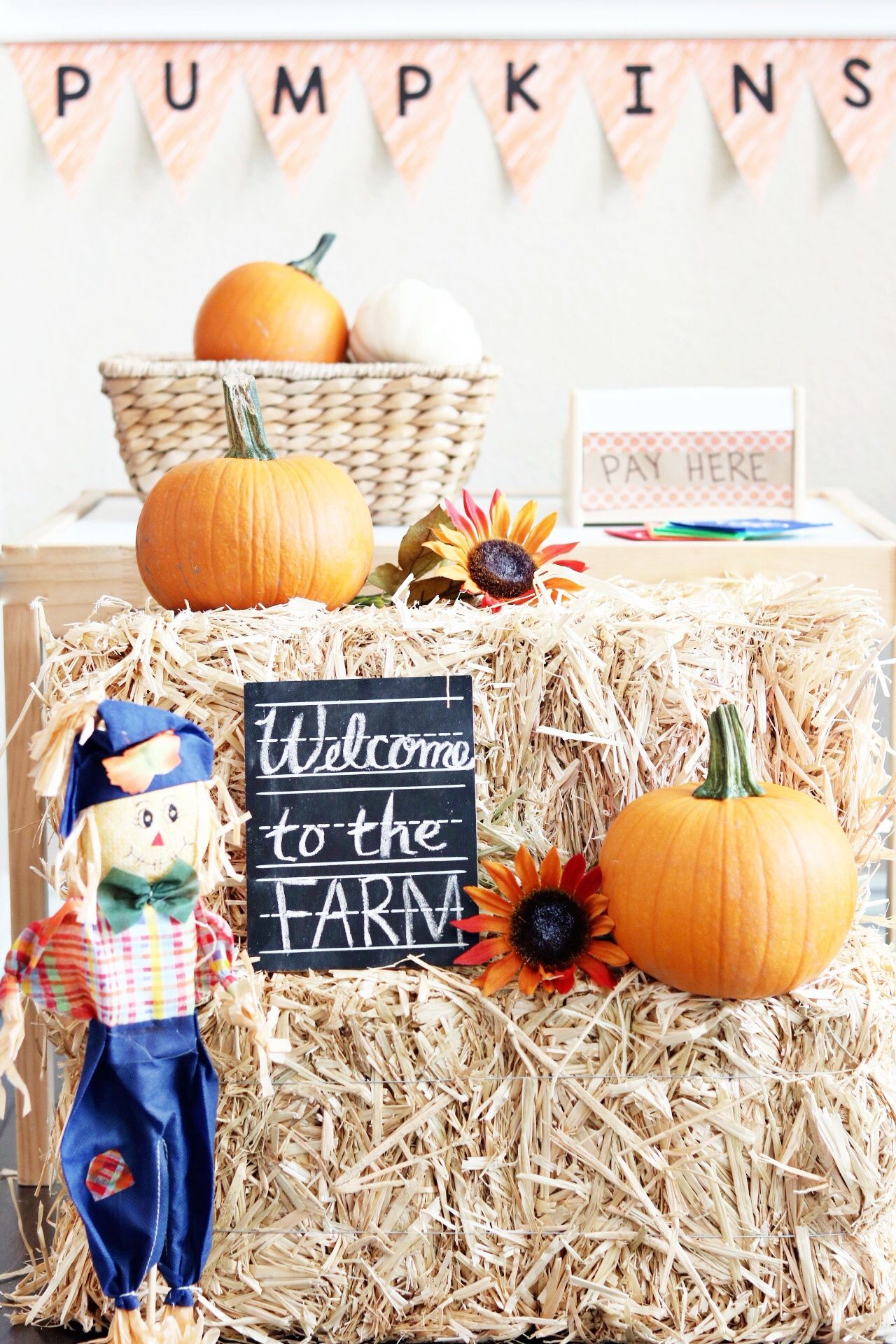
Using real pumpkins, hay bales, and simple props allows children to explore what it feels like to visit a farm before or after the experience. This type of play helps children feel more confident while reinforcing learning through hands-on exploration.
As children interact with the farm stand, they naturally practice early math skills by counting money, exchanging pretend cash, and talking through buying and selling pumpkins. Carrying pumpkins builds strength and coordination while encouraging conversation about size, weight, and comparison.
Farm stand play also supports language development and social skills as children role-play familiar routines. Learning becomes more meaningful when children can practice skills in a setting that mirrors real life.
Seasonal, real-world play helps learning feel connected, purposeful, and memorable.