Sensory bins are often seen as simple play activities, but they offer rich learning opportunities for young children. When thoughtfully prepared, sensory bins support exploration, focus, and skill development in a way that feels natural and engaging.
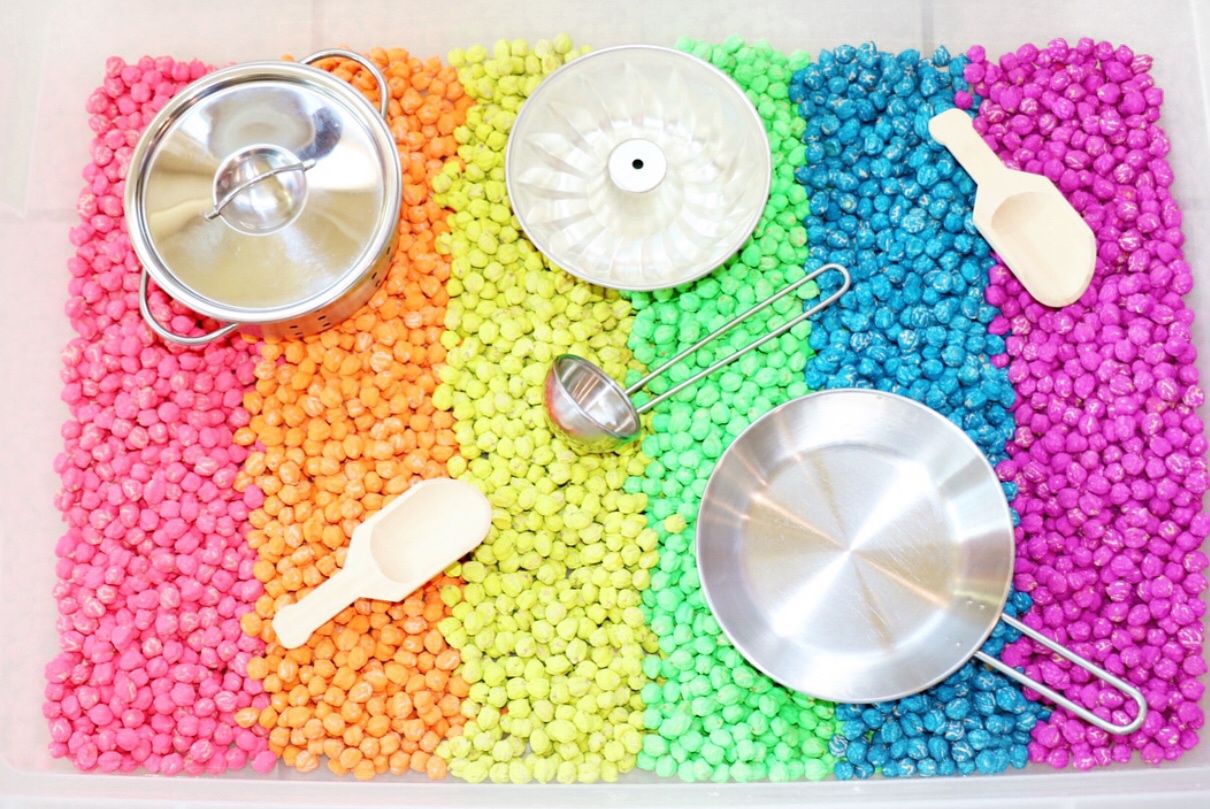
Using materials like dyed chickpeas creates a multi-sensory experience that invites children to touch, scoop, pour, and observe. These actions strengthen fine motor skills and hand-eye coordination while also supporting early problem-solving and concentration.
As children interact with a sensory bin, they are making decisions and testing ideas. They notice textures, compare amounts, and experiment with movement. These experiences help build early math and science concepts without the need for direct instruction.
Sensory bins also support language development. Children naturally describe what they feel, see, and do. Conversations emerge through play, allowing adults to introduce new vocabulary and extend learning through thoughtful questions.
Adults play an important role by intentionally choosing materials and setting up the environment. Once the bin is prepared, stepping back allows children to explore freely and build confidence in their choices.
Sensory bins are not about keeping children busy. They are about creating space for meaningful, hands-on learning that supports development across multiple areas.
When learning engages the senses, it becomes deeper, more memorable, and more enjoyable.